Key takeaways
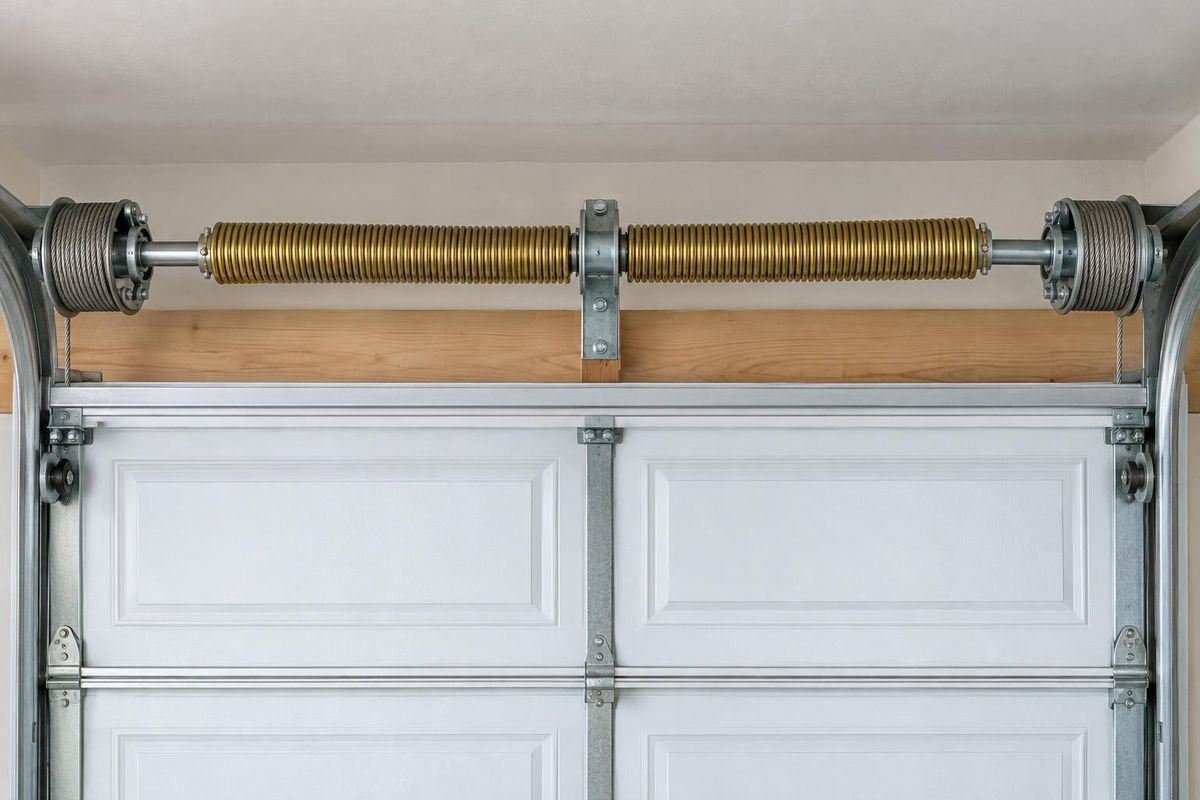
- Torsion springs sit above the door on a shaft and twist to lift.
- Extension springs run along the horizontal tracks and stretch to lift.
- Both are under very high tension and are dangerous to handle.
- Springs are rated for a number of cycles, so use and quality matter.
How torsion springs work
A torsion system has one or two springs on a steel shaft above the door. Cables connect the drums on the shaft to the door. As the door lowers, the springs wind up, and as it rises they unwind and help lift it.
Torsion springs give smooth, controlled movement and are common on most newer doors.
How extension springs work
Extension springs run alongside the horizontal tracks. They stretch as the door closes and pull as it opens. Safety cables run through them to contain a break.
They are common on older and lighter doors.
Cycles and wear
A cycle is one open and one close. Standard springs are rated for a certain number of cycles, and high-cycle springs for more. A busy household can use a standard spring up faster than expected.
Rust, poor balance and age also shorten life.
Why professionals should replace them
Springs hold a great deal of stored energy and must be wound and set with proper bars and care. A slip can cause serious injury. Replacement also involves checking cables, drums and balance.
We replace springs safely and test the door afterwards.
Quick answers
How long do garage door springs last?
It depends on the rating and use. Many last for several years of normal use.
Should both springs be replaced together?
Usually yes, to keep the door balanced.
Can I tell which type I have?
If the spring is on a shaft above the door it is torsion. If it runs along the side tracks it is extension.